Mirrors Between Us_Loving Disclaimer and Purpose

Mirrors Between Us_Loving Disclaimer and Purpose

Author: Cody J. Rice-Velasquez
Audience: My family first; the wider community second
Intent: Reconciliation through truth + compassion

Loving Disclaimer (read me first)

This letter reflects my memories, perceptions, and lived experiences.
It isn’t meant to diagnose or define anyone—only to share what I saw, how I felt, and what I’ve learned from our story.
Everything here is written with love—not the sentimental kind, but the kind that seeks truth even when it hurts, because truth is love in action.

I’ve been learning from teachers like Carl Jung, Eckhart Tolle, and Jesus himself—all pointing to the same truth:
there are only two measures in life—to give love or to withhold it. Everything else is noise.

“Truth is love in action.”

This letter is addressed first to my family—but also to every reader who has ever felt split between truth and belonging.
I am writing this not just to reconcile our bloodline, but because I know what we heal here echoes outward.
Families are micro-universes: when one reconciles, the cosmos learns a new shape.
So this becomes another instrument in my kit for the world’s repair—one more mirror polished for others to see their own reflection clearly.

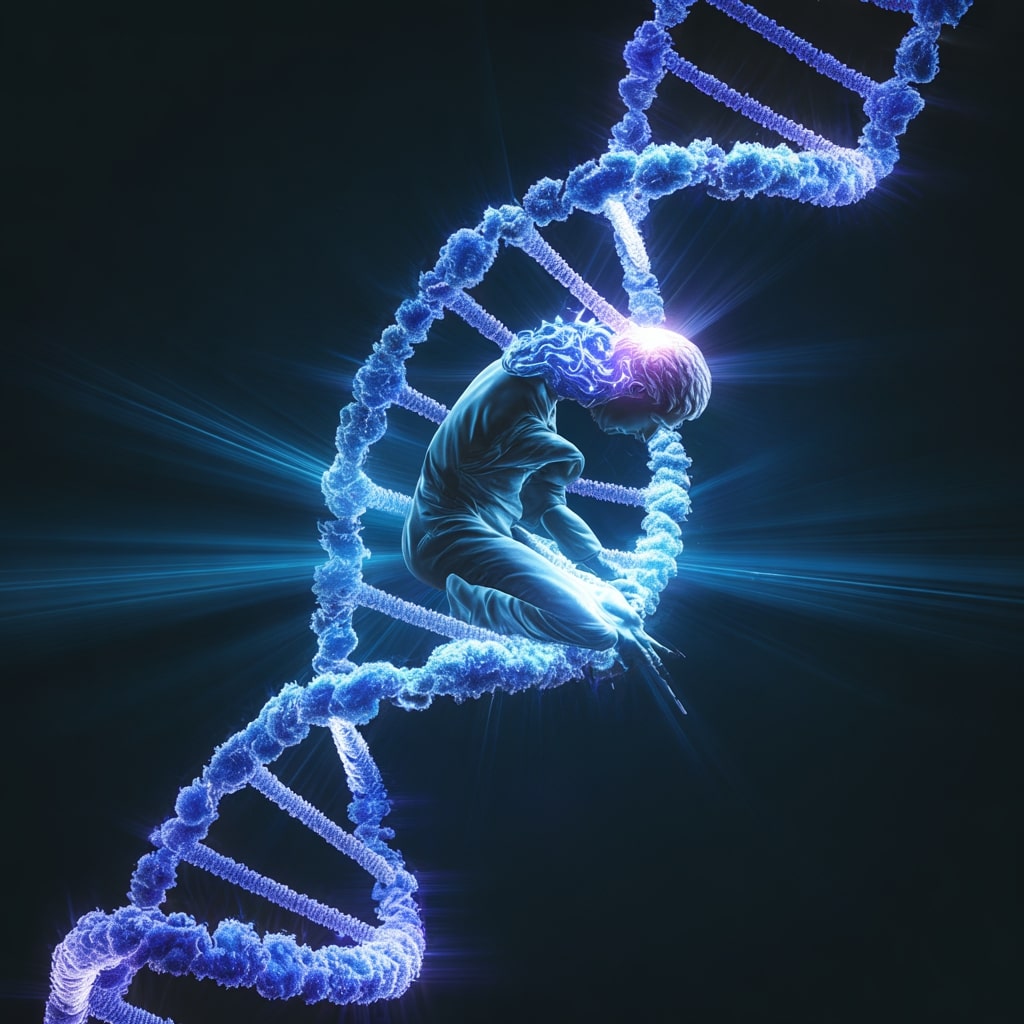
Science now speaks the language of spirit: neuroscience confirms that love and empathy re-wire the brain; trauma leaves measurable fingerprints on the genome. [1]
Faith reminds us why we should use that knowledge. [2]
Logic and mysticism are finally shaking hands.

[!reflection]
Where have you withheld love in the name of logic—or denied reason in the name of faith?
Both are halves of the same mirror.

How to read this

  • When I name patterns (control, avoidance, masking, survival), I’m naming impacts and my experience, not anyone’s essence.
  • When I use words like “shadow” or “programming,” I’m pointing to mechanisms that many of us inherit—not moral worth.
  • If something feels off, ask me. Dialogue beats distance.

Purpose (why this exists)

  1. For my family: to lay our cards on the table with tenderness and backbone—so we can end the cliques, the quiet wars, and the old pecking orders, and build a connected, mutual, grown family. I want Mom included, Dad included, every aunt/uncle/sibling included—no one outside the circle.

  2. For the world: this is also a tool in my kit—a model others can adapt to help their families heal from their pasts. Our story is personal and universal: most families carry dust in the corners and cracks in the foundation. The work is to let the light in and repair together.

  3. For integrity: my proclamation of worth is not a middle chapter—it’s the final lesson this document builds toward. After we name the house’s history and cost, we end in an unshakeable truth: my value, your value, every person’s value is non-negotiable. (That finale isn’t a demand for repayment; it’s an invitation to see correctly.)

  4. For alignment with faith and reason:

    • Faith frames the why: love is the measure. (Bible Gateway)

    • Science informs the how: understanding stress, memory, emotion, and repair helps us choose wiser responses. ACEs research shows why survival patterns linger; emotion science explains why naming, breathing, and context-shifts help; forgiveness research shows why release frees the giver first. (Psychology Today)

    • Presence (Tolle) is the bridge: healing happens now, one honest conversation at a time. (Harvard Health)

Guardrails (how we’ll keep this safe)

What I’m asking of you (near-term)


Quick “learn-more” map (optional)


[[1Home-Foundations]]
[[2
The Mothers and the Divisions]]
[[3The Shadow and the Inheritance of Pain]]
[[4
The Cost of Carrying]]
[[5Identity and Truth]]
[[6
Breaking the Program — The Proclamation of Worth]]
[[7The Path Forward]]
[[8
Release]]
[[9_Closing]]


![[Pasted image 20251101142456.png]]

Continue
Home Foundations

Home Foundations


Think of our family as a house we built together. Sturdy and full of laughter, yet time has layered dust in its corners and hairline cracks in the foundation.
We painted over them for years with holiday smiles and surface forgiveness.
This is not about demolition; it is about ventilation — opening the windows so truth and air can move again.

My father grew up in a home where love and fear were often the same gesture.
Abuse and manipulation were taught as discipline, and crime was sometimes the only currency of power.
In southern Indiana in the 1960s, a young Black boy learned that safety depended on silence and perception.
Survival was not instinct but homework.
That lesson hard-wired his nervous system: alertness as love, control as care.

Modern epigenetic research shows that trauma does not end with the event—it etches itself onto gene expression, altering stress hormones for generations. [3]

We often laughed about our elders’ “ways.” But those weren’t quirks—they were wounds in costume.
They did what they knew with what they had. And what they had was scarcity, fear, and the instinct to survive.
When survival is your teacher, tenderness feels like a luxury.
We were born not of evil, but of unhealed survival.

When a person seals off their emotions for too long, a shadow forms—a repository for everything exiled from consciousness. It does not die there; it waits.
And when it finally emerges, it comes out sideways: anger instead of tears, sarcasm instead of fear, control instead of care.

Consider what you’ve inherited that isn’t genetic: a tone, a reaction, a silence. What does it cost you to keep it?

Further Reading & Reflection — Foundations

  1. Bessel van der Kolk (2014). The Body Keeps the Score. Viking.
  2. Gabor Maté (2022). The Myth of Normal. Knopf.
  3. Rachel Yehuda et al. (2016). “Epigenetic Biomarkers of Intergenerational Trauma.” American Journal of Psychiatry.
  4. Matthew 7:24-27 — The wise builder: foundations built on truth and love.
Continue
The Mothers and the Divisions

The Mothers and the Divisions

Our lineage has always been a chorus of strong women singing different melodies.
My mother’s song was love through transparency. Even when life hit her hard, her affection was a constant frequency—loud enough to cover the static of poverty and pain.
She had her own battles—mental health struggles, economic stress, moments where the world felt too heavy.
But she never withheld her heart. I could tell her anything—things that would send other parents into rage or fear—and she’d just listen. That safety was my first taste of God.

Rosemary chose a different song: control as safety. She took on everybody’s responsibility until it calcified into authority.
What looked like dominance was a child’s panic that never grew old—if I can keep everything perfect, nobody gets hurt.
I see her now with compassion. Control was her shield.

Then there’s Robyn, the sensitive yet practical observer, the family translator who never quite felt fluent. Her humor hid her pain. She consciously decided on a different life choosing her happiness over expectation. Some of the family shame her for this but i applaud her for living her truth without compromise.

And then my father’s new marriage—its own orbit with its jealous moons. My mother became an outsider to a house she helped build. The new wife guards her territory like a country under siege, but possession is not love; it’s fear wearing jewelry. Interprets genuine friendship and platonic love as a violation or a threat to be neutralized.

We’ve all played our parts in these dramas, and it’s time to retire the roles.
We are too grown, too tired, and too close to the end to keep acting like rival cast members in a family sitcom.
The only season left to air should be forgiveness.

“Forgiveness is not forgetting the story—it’s changing its ending.”

Neuroscience tells us that reconciliation literally rewires the brain. Oxytocin and dopamine rise when we re-establish trust. [4]
Faith tells us the same thing with simpler words: Love casts out fear. (1 John 4:18)

What small ritual could you create to honor both your boundaries and your longing for belonging?

Further Reading & Reflection — Mothers & Divisions

  1. Harriet Lerner (2004). The Dance of Connection. Harper Collins.
  2. Murray Bowen (1978). Family Therapy in Clinical Practice. Jason Aronson.
  3. Brené Brown (2010). The Gifts of Imperfection. Hazelden.
  4. 1 Corinthians 13:4-7 — Love is patient, love is kind…
Continue

The Shadow and the Inheritance of Pain

The Shadow and the Inheritance of Pain

When we bury feelings, they don’t die; they hibernate.
Carl Jung called this the Shadow — the unlived self that waits for permission to return.
Every emotion we refuse builds a version of us that acts out when we’re not looking.

My father once seemed to embody the phrase “a white guy trapped in a Black body.” It wasn’t a lie; it was armor.
Assimilation was safety. If he could blend in, he could breathe. In a region where difference invited danger, his mimicry was a form of camouflage — a code-switching so deep it became identity.
He was not pretending; he was surviving.

Sociologists describe this as “adaptive identity formation,” common among marginalized groups in hostile environments. [5]

Over time, the performance became habit, and habit became mask. He found order in the Army—rules, hierarchies, predictability.
That discipline saved him but also imprisoned him. War programs the body to expect threat; when the battle ends, the program does not.
He lives inside that residual code still—hyper-vigilant, stoic, haunted by ghosts of duties long fulfilled.

The shadow is never the enemy. It’s the part of you that still believes you deserve love only after you’ve earned it.

The task for him—and for us—is integration: not to slay the shadow but to invite it home.
That is the spiritual work and the psychological work, identical in purpose.
Jesus called it forgiveness; Jung called it individuation. Both mean becoming whole.


Further Reading & Reflection — Shadow and Pain

  1. Carl Jung (1959). The Archetypes and the Collective Unconscious. Princeton University Press.
  2. Richard Rohr (2011). Falling Upward. Jossey-Bass.
  3. Lisa Feldman Barrett (2017). How Emotions Are Made. Houghton Mifflin.
  4. Luke 6:37-42 — On judgment and self-reflection.

— End of Part 1 —
(Part 2 continues with Sections 4 – 6: “The Cost of Carrying,” “Identity and Truth,” and “Breaking the Program — The Proclamation of Worth.”)

Continue
The Cost of Carrying

The Cost of Carrying

I carried what wasn’t mine. Many of us did.
Every generation hides its weight in the next one’s pockets.
I was the quiet, careful child—the buffer, the stabilizer, the one who anticipated tension before it broke the surface.
That wasn’t maturity; that was adaptation.

My childhood was shaped around other people’s pain.
If my father’s silence thickened, I shrank smaller.
If my mother’s nerves frayed, I softened my tone.
I learned emotional triage before I learned algebra.

“When a child becomes the adult in the room, their innocence becomes collateral damage.”

That habit followed me into adulthood.
Even now, when something shatters, my first instinct is not to cry but to sweep.
It took therapy, prayer, and study to realize that constant containment isn’t compassion—it’s compression.

Trauma researcher Judith Herman reminds us: “Recovery can take place only within relationships; it cannot occur in isolation.” [1]
My independence, once praised, was born of necessity.
But healing demanded interdependence—the willingness to be held.

What part of you still confuses exhaustion with loyalty?

I am not angry at my parents for the burdens I bore.
They were repeating the code they learned: love equals labor.
But I name it now so it can stop here.
Responsibility shared becomes weight divided.


Further Reading & Reflection — Carrying

  1. Judith Herman (1992). Trauma and Recovery. Basic Books.
  2. Peter Levine (1997). Waking the Tiger: Healing Trauma. North Atlantic Books.
  3. Stephen Porges (2011). The Polyvagal Theory. Norton.
  4. Galatians 6:2 — “Carry each other’s burdens, and in this way you will fulfill the law of Christ.”

Continue
Identity and Truth

Identity and Truth

From early on, I sensed that my exterior didn’t quite match my interior.
The body was assigned; the spirit was chosen.
My femininity and fluidity aren’t rebellion—they’re revelation.

I know this unsettled some relatives.
It challenged a system already fragile, built on silent hierarchies of who gets to be what.
But the soul doesn’t need permission slips.
It just keeps knocking until the door of authenticity opens.

“Gender is not a costume; it is the grammar of the soul.”

Neuroscience affirms that authenticity lowers cortisol and strengthens the immune response [2];
Jesus affirmed the same truth when he said, “You will know the truth, and the truth will set you free.”

My father’s expectations of manhood were forged in survival: stoic, strong, unbending.
To him, softness looked like danger.
To me, it looked like home.
So we stood in mirrored armor, each thinking the other refused to yield.

But love isn’t a debate to be won; it’s a frequency to be tuned.
I don’t need him to understand every nuance—only to stop equating difference with disrespect.
My being does not negate his.
Our coexistence is proof that the divine expresses itself in contrast.

What if the part of someone you judge most harshly is the exact fragment of God assigned to expand you?

Further Reading & Reflection — Identity and Truth

  1. Carl Rogers (1961). On Becoming a Person. Houghton Mifflin.
  2. Andrew Huberman Podcast (2023). “Neurobiology of Authenticity and Stress Response.”
  3. Eckhart Tolle (2005). A New Earth. Penguin.
  4. John 8:32 — “You will know the truth, and the truth will set you free.”
Continue
Breaking the Program – The Proclamation of Worth

Breaking the Program – The Proclamation of Worth

My father never wanted children.
I understand that more than he might believe.
Parenthood is terrifying when you’ve never been parented gently.

But here I am—living proof that purpose ignores preference.
Whether I was planned, accidental, or as I once put it, an abortion gone wrong, it changes nothing.
My worth isn’t negotiable.
It existed before conception and will outlast the flesh that carries it.

“I am valuable. I am worth love. I am worth respect. I am worth so much—just because I am.”

This proclamation isn’t ego; it’s equilibrium.
Modern neuroscience tells us consciousness itself is improbable, a statistical miracle [3].
The odds of any of us existing are roughly 1 in 10²,⁷⁰⁰,⁰⁰⁰.
So to doubt your worth is to argue with arithmetic.

Faith frames it differently: “You knit me together in my mother’s womb.” (Psalm 139:13)
Science and scripture agree—existence is intent.

When I finally spoke this truth aloud, I felt generations unclench behind me.
It was as if my ancestors exhaled through my lungs.
The lineage needed someone to say, enough.
I am that voice, and it is not rebellion—it’s release.

Say it quietly: “I was never a mistake.” Notice what happens inside your body when you do.

Further Reading & Reflection — Proclamation of Worth

  1. Viktor Frankl (1946). Man’s Search for Meaning. Beacon Press.
  2. Andrew Newberg & Mark Waldman (2010). How God Changes Your Brain. Ballantine.
  3. Neil deGrasse Tyson (2019). Astrophysics for People in a Hurry. Norton.
  4. Psalm 139:13-14 — “You knit me together in my mother’s womb.”

— End of Part 2 —
(Part 3 continues with Sections 7 – 9: “The Path Forward,” “Release,” and “Closing.”)

Continue
The Path Forward

The Path Forward

7. The Path Forward

Healing demands more than reflection—it requires construction.
We cannot keep sweeping the same floors and calling it clean.
The house stands, but its rooms echo with avoidance: unspoken words, sideways glances, years of polite frost.
It’s time to rebuild—not by erasing history but by reinforcing it with honesty.

No more cliques. No more small alliances that make outsiders of our own blood.
Rosemary’s circle, Robyn’s circle, my father’s, my mother’s exile—these partitions have exhausted everyone.
We can’t keep burning the bridge between the kitchen and the living room and then wondering why it’s cold.

“Repair isn’t about blame—it’s about blueprint.”

Each of us must decide to reopen the windows.
That means actual practice: setting a time to talk, listening without rehearsing rebuttals, inviting everyone to the same table.
Truth does not need shouting; it needs a chair.

Neuropsychology shows that active reconciliation restores the brain’s empathy circuits; faith describes the same process as grace.
Jesus told his followers to “leave your gift at the altar” and reconcile with your sibling first (Matthew 5:23-24).
Even worship is incomplete without relationship repair.

I propose a small experiment: a “House Repair Document.”
Everyone adds one sentence:

That’s it—no arguing, no editing.
Just construction material for the new foundation.

If the family were a home, which window could you open first?

Healing isn’t a group project graded on attendance; it’s an ecosystem that begins when one member decides to breathe differently.
Let’s be those lungs.


Further Reading & Reflection — Path Forward

  1. Thich Nhat Hanh (2001). Peace Is Every Step. Bantam.
  2. Brené Brown (2018). Dare to Lead. Random House.
  3. Matthew 18:15-20 — On reconciliation and community repair.
  4. Steven Porges (2023). “Neurobiology of Safety and Social Connection.” Frontiers in Psychology.
Continue
Release

Release

I want to briefly mention a friend of mine who is no longer with us in this space-time and I want to honor her.

V was the sister of the man who once stopped me from ending my life.
She was my mirror—different history, same frequency.
We’d talk for hours about spirit, science, and survival, about how laughter is just grief with better rhythm.
We planned a podcast, a small broadcast of light in a noisy world.

Then she was murdered by a gang member—one block from my house one month-ago.
The same night, I was meant to be out but fell asleep early, like some unseen hand hit the dimmer switch and said, not tonight.
When I woke and heard, the world blurred.
The shock wasn’t cinematic; it was bone-deep quiet.

“Some angels don’t ascend; they detonate.”

Her death is a mirror of urgency.
Life is not rehearsal—it’s one, continuous take.
I write now with the same breath she no longer has, and I will use it well.

Trauma research calls this post-traumatic growth—the capacity to transform loss into expansion. Faith calls it resurrection.
Either way, it’s the same math: energy never dies; it evolves.

So I choose to live differently because she cannot.
To speak because she cannot.
To forgive because that’s the only language the dead understand.

Who would you honor by living more bravely today?

Further Reading & Reflection — Release

  1. Kübler-Ross & Kessler (2005). On Grief and Grieving. Scribner.
  2. Andrew Newberg (2018). Neurotheology: How Science Can Enlighten Us about Spirituality. Columbia University Press.
  3. Tedeschi & Calhoun (2004). “Post-Traumatic Growth: Conceptual Foundations.” Psychological Inquiry.
  4. John 8:12 — “I am the light of the world.”
Continue
Closing

Closing

This is my truth, my offering, my release.
It took decades to gather enough light to write it without venom.
I am no longer auditioning for worth.

“Truth without love wounds; love without truth withers. Healing requires both.”

To my family: I want connection, not coronation.
To my mother—thank you for the honesty that raised me.
To my father—thank you for the discipline that forged me, even when it hurt.
To every sibling, aunt, cousin—thank you for being fragments of the same divine experiment.

Let’s choose a new inheritance: not property or grudges, but understanding.
Let’s make this house a temple again.

What if the legacy we left was simply peace?

Let the light in — whatever happens next, I am free.

Love always,
Cody J. Rice-Velasquez

© 2025 Cody J. Rice-Velasquez. All rights reserved.
Part of EmpowerQNow.


Final Bibliography & Integrative Sources

  1. Carl Jung — Collected Works vol. 9 (Aion), Princeton University Press.
  2. Eckhart Tolle — The Power of Now (1997); A New Earth (2005).
  3. Bessel van der Kolk — The Body Keeps the Score (2014).
  4. Gabor Maté — The Myth of Normal (2022).
  5. Richard Rohr — Falling Upward (2011).
  6. Andrew Newberg — Neurotheology (2018).
  7. Viktor Frankl — Man’s Search for Meaning (1946).
  8. Scripture passages from the New Revised Standard Version (NRSV).

— End of Part 3 / Full Manuscript Complete —